


You will not be allowed to compare more than 4 products at a time
View compareSuperfeet BERRY Women's High Impact Insoles
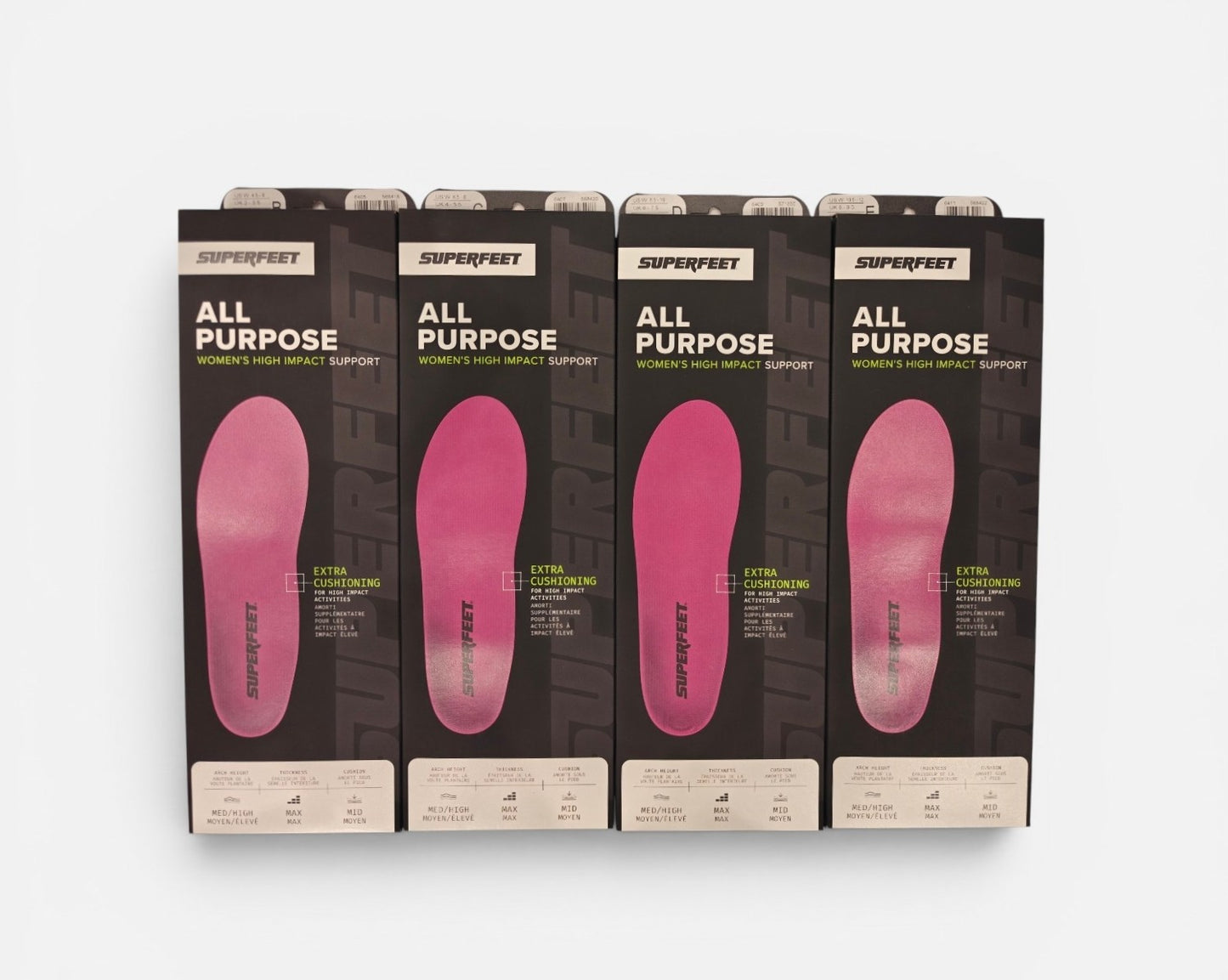
Superfeet BERRY Women's High Impact Insoles
Regular price
$59.99 CAD
Sale price
$59.99 CAD
Regular price
Unit price
per
Shipping calculated at checkout.
Low stock

Description
Shipping Information
Women's Feet Need Women's Insoles
Women's feet are not just smaller versions of men's feet — the shape is genuinely different. Narrower heels, more flexible arches, and different forefoot proportions affect every step taken. Unisex insoles often slip in the heel and pinch the forefoot during women's activities. Superfeet BERRY is engineered specifically for women's foot anatomy — particularly plantar fasciitis cases. Yaletown Medical Supplies stocks BERRY for Vancouver women dealing with heel pain and athletic demands. This guide explains why women need different insoles and how BERRY addresses female foot conditions.
Quick Reference
This insole fits women meeting these specific activity and anatomical profiles:
| Specification | Details |
|---|---|
| Brand | Superfeet |
| Line | High Impact (color-coded BERRY for women's) |
| Designed for | Women's feet — narrower heel, different forefoot |
| Best for | Plantar fasciitis, hiking, court sports, active work |
| Stabilizer cap | Yes — deep narrow heel cup |
| Foam type | High-density closed-cell foam forefoot |
| Arch profile | Medium |
| Sizing | A, B, C, D (women's shoe sizes) |
| Made in | USA |
| Thicness | MAX. |
Why Women Need Different Insoles
The anatomical differences between women's and men's feet matter enormously for insole effectiveness:
- Narrower heels — women's heels are proportionally smaller than men's at same length.
- Higher arches on average — though variations exist within both genders naturally.
- Smaller forefoot width — relative to heel width compared to male foot proportions.
- Different weight distribution — women carry weight differently across the foot during walking.
- Pregnancy effects — foot shape changes permanently during and after pregnancies.
- Hormonal influences — pregnancy, breastfeeding, and menopause affect ligament looseness.
- Footwear effects — high heels alter foot biomechanics during years of use.
Unisex insoles designed for men's feet often fail women — generating heel slip and forefoot pinch.
The Engineering Behind BERRY High Impact
Superfeet engineers BERRY specifically for women's foot anatomy while delivering high impact protection.
The structural components designed for women:
Component 1: Narrower Heel Cup The heel cup is shaped specifically for women's narrower heel proportions naturally. This prevents heel slip during running, hiking, and lateral sports movements daily. The deep cup design cradles the heel fat pad for natural shock absorption.
Component 2: Women's Stabilizer Cap A rigid plastic shell shaped specifically for women's foot biomechanics during impact. The cap prevents overpronation common in women with flexible feet and arches. This rigid structure separates BERRY from foam-only women's insoles available elsewhere.
Component 3: Female-Specific Forefoot The forefoot uses high-density foam shaped for women's narrower toe proportions. Closed-cell material resists compression for years of regular athletic use. The forefoot accommodates wider women's feet through trim-to-fit customization.
Component 4: Breathable Top Layer A moisture-wicking top layer reduces odor and prevents bacterial growth during athletic use. This layer matters particularly in women's tighter-fitting athletic and hiking footwear styles.
Plantar Fasciitis in Women: Specific Factors
Plantar fasciitis affects women slightly more than men — for several gender-specific reasons:
Pregnancy and postpartum factors:
- Pregnancy weight gain stresses the plantar fascia during the third trimester.
- Hormonal ligament loosening continues for months after giving birth completely.
- Carrying babies and toddlers adds asymmetric load to the plantar fascia tissue.
- Foot size and shape often change permanently after pregnancy.
Footwear-related factors:
- High heels shorten the calf muscles over years of wear.
- Shortened calves transfer stress directly to the plantar fascia tissue.
- Flat ballet flats and unsupportive shoes worsen plantar fasciitis significantly.
- Frequent switching between heels and flats stresses the fascia repeatedly.
Activity factors:
- Women's prevalence in nursing and teaching means long days on hard floors.
- Hiking and recreational running increase plantar fasciitis risk in active women.
- Court sports like tennis stress the plantar fascia through lateral movements.
Menopause factors:
- Hormonal changes affect connective tissue elasticity around menopause years.
- Bone density changes affect foot mechanics during the menopausal transition.
- Weight gain during menopause stresses the plantar fascia tissue additionally.
How BERRY Helps Women's Plantar Fasciitis
BERRY interrupts the women's plantar fasciitis pain cycle through specific biomechanical mechanisms:
- Stabilizes the narrow heel — prevents motion that aggravates the plantar fascia.
- Supports the women's arch shape — direct support reduces fascia stretch during activity.
- Cushions the heel pad — deep heel cup absorbs impact at the fascia attachment.
- Reduces overpronation — common in women with flexible feet and loose ligaments.
- Distributes pressure evenly — across women's narrower foot shape proportions.
- Works across all shoes — from hiking boots to work clogs to athletic shoes.
- Addresses postpartum changes — supports feet that changed shape after pregnancies.
Most women notice meaningful plantar fasciitis pain reduction within 2-4 weeks of consistent use.
Best Activities for Superfeet BERRY
BERRY serves women's specific activity profiles better than unisex high impact options:
- Hiking the North Shore trails — Grouse Grind, Quarry Rock, and similar Vancouver routes.
- Tennis and pickleball — lateral movements need the BERRY stabilizer cap protection.
- Group fitness classes — Zumba, BodyPump, and HIIT classes stress women's feet daily.
- Nursing 12-hour shifts — hospital floor work demands maximum support continuously.
- Teaching and standing professions — full-day standing work with proper foot support.
- Postpartum running return — protects feet that changed shape during pregnancy.
- Recreational basketball and volleyball — court sports with jumping and lateral motion.
- Active grandmothers — chasing grandchildren needs serious foot support every day.
BERRY is NOT the best choice for pure running — Superfeet Run Support fits better.
BERRY vs ORANGE: Which One for You?
The choice between BERRY (women's) and ORANGE (unisex/men's) depends on foot anatomy:
| Factor | ORANGE | BERRY |
|---|---|---|
| Heel width | Wider (men's) | Narrower (women's) |
| Forefoot width | Wider | Narrower |
| Sizing range | C-H | B-E |
| Best for | Men, wide-footed women | Most women |
| Plantar fasciitis | Both work equally well | Both work equally well |
Choose BERRY when:
- You're a woman with average to narrow feet for your length.
- ORANGE feels too wide in the heel or forefoot during testing.
- You prefer a women's-specific shape across your insoles.
- Your shoe size is between Women's 4.5 and 12 across all your athletic shoes.
Choose ORANGE when:
- You're a man at any size.
- You're a woman with wider feet that need extra forefoot room.
- Your shoe size exceeds Women's 12 (rare).
- ORANGE fits your athletic shoes better during in-store testing.
Installation in Your Shoes
Proper installation makes the difference between full benefit and continued pain:
Step 1: Remove the Existing Insole Pull out the shoe's original insole before inserting BERRY. Keep the original for reference and possible return to it later.
Step 2: Test Fit Without Trimming Place BERRY inside the shoe and check the fit across length and width. The insole should match the shoe length without extending past the toe.
Step 3: Trim If Needed Use the original insole as a template — place it over the BERRY for guidance. Trace the shape and trim BERRY with scissors carefully along the line.
Step 4: Final Test Put the shoe on and walk around for 5-10 minutes during normal activities. Check for pressure points, heel slip, or discomfort during the test walk.
Step 5: Multiple Pairs for Multiple Shoes Most women use BERRY in 2-3 pairs — hiking boots, work shoes, athletic shoes. Rotate among shoes throughout the week to extend the life of each insole pair.
The Break-In Period
BERRY requires a break-in period for proper adaptation by your feet and arches:
Week 1 — Limited Wear:
- Wear the insoles for 2-3 hours per day during daily activities only.
- Mild arch discomfort is normal as foot muscles adjust to the new support.
- Switch to old insoles if pain becomes significant during the first days.
Week 2 — Gradual Increase:
- Increase wear time to 4-6 hours per day across daily activities.
- Most women notice reduced foot fatigue during this transitional adaptation phase.
Week 3 — Full Wear:
- Wear the insoles for full days during work, sports, and casual activities.
- Most plantar fasciitis patients notice meaningful pain reduction during this week.
Week 4 and Beyond:
- Full plantar fasciitis relief typically achieved at 4-6 weeks consistently.
- Continue wearing daily — discontinuing causes pain to return within weeks.
Other Women-Specific Foot Conditions BERRY Helps
Beyond plantar fasciitis, BERRY benefits several foot conditions common in women:
- Morton's neuroma — nerve compression between toes from narrow shoes.
- Metatarsalgia — ball-of-foot pain common in women wearing heels.
- Bunions — proper foot alignment slows bunion progression in early stages.
- Posterior tibial tendinitis — flatfoot deformity affecting middle-aged women.
- Heel spurs — calcium deposits at the plantar fascia attachment causing pain.
- Achilles tendinitis — high heel wear shortens the Achilles tendon causing pain.
- Lower back pain — proper foot support reduces compensatory back strain throughout day.
- Knee pain (women runners) — Q-angle differences make knee tracking more challenging.
BERRY addresses these conditions through women-specific biomechanical correction across multiple shoes.
Care and Replacement
BERRY lasts 12 months of regular daily use before requiring replacement.
Care tips:
- Hand wash insoles with mild soap and warm water every 2-3 weeks during use.
- Air dry completely before reinserting into shoes — never use heat sources.
- Rotate between shoes to extend life — buy multiple pairs for multiple shoe types.
- Inspect monthly for compression, cracks, or visible wear patterns over time.
- Replace immediately if the stabilizer cap cracks or foam compresses permanently.
Signs you need replacement:
- Pain returns despite consistent daily wear in good supportive shoes.
- Visible wear on the top cover or noticeably compressed foam areas.
- Cracks in the rigid stabilizer cap on the underside of the insole.
What Yaletown Stocks for Women's Foot Support
Yaletown Medical Supplies stocks the complete Superfeet line for Vancouver women:
- Superfeet BERRY (Women's High Impact) — for women's plantar fasciitis and active use.
- Superfeet ORANGE (Men's/Unisex High Impact) — for wider women's feet alternative option.
- Superfeet Women's Run Support — for women focused on running specifically as primary activity.
- Superfeet GREEN (Original High Arch) — unisex high-arch daily wear with rigid support.
- Superfeet BLUE (Everyday Medium Arch) — unisex medium arch casual daily wear.
- Custom orthotics — for complex women's foot conditions beyond off-the-shelf options.
Our trained staff fits each woman with the right Superfeet color during the visit.
Common Questions
Will BC extended health insurance cover Superfeet BERRY? Many plans cover prescription orthotics — but off-the-shelf insoles like Superfeet usually do not. Yaletown provides itemized receipts for any insurance reimbursement attempts you choose.
How long does BERRY last? Quality lasts 12 months of regular daily wear before performance declines noticeably. Heavy users (nurses, hikers, athletes) may need replacement at 8-10 months instead.
Can I use BERRY during pregnancy? Yes — BERRY is safe and beneficial during pregnancy for foot support during weight gain. Foot size changes during pregnancy may require re-sizing after delivery completes.
Will BERRY help if I wear high heels daily? BERRY fits inside athletic and hiking shoes — not high heels with narrow toe boxes. Use BERRY in athletic shoes during off-hours to undo heel wear damage.
Can I use BERRY in winter boots? Yes — BERRY fits most women's winter boots, hiking boots, and work boots properly. Trim the length using the original insole as a template before insertion.
What if BERRY feels too narrow for my feet? Some women have wider feet and benefit from ORANGE despite being women. Test both BERRY and ORANGE in our store before committing to one specific option.
Does BERRY work for postpartum foot changes? Yes — many postpartum women find BERRY essential as feet permanently change after pregnancy. Have your feet re-measured after pregnancy to ensure correct BERRY size for new shape.
Can I machine wash BERRY insoles? No — hand wash only with mild soap and warm water for proper care. Machine washing damages the stabilizer cap and reduces effectiveness significantly.
Will BERRY help my bunion pain? BERRY reduces bunion progression by improving foot alignment during daily walking. Severe bunions may require additional treatment — consult a podiatrist for advanced cases.
How is BERRY different from regular women's insoles? BERRY uses a rigid stabilizer cap — most women's insoles use soft foam only. The rigid cap provides biomechanical correction that foam-only insoles cannot deliver.
Visit Yaletown for Women's Foot Support Today
Plantar fasciitis pain affects more women than men — particularly active women in Vancouver. Superfeet BERRY addresses the underlying biomechanics of women's plantar fasciitis specifically. Visit Yaletown Medical Supplies for in-store sizing and BERRY fitting today. Call 236-466-2141 or visit 1255 Pacific Blvd, Vancouver, BC for expert insole guidance.
We take great care to ensure that your order reaches you safely and promptly. All orders are processed and dispatched within 1-3 business days, depending on product availability. We work with reliable shipping partners to ensure fast and secure delivery.
Once your order has been shipped, you will receive a tracking number to monitor the progress of your shipment. Delivery times may vary depending on your location, typically ranging from 3 to 9 business days.
Please note that shipping will only be processed once payment has been fully completed. Orders will not be shipped until the payment is confirmed.
If you have any questions, feel free to contact our customer support team. We are happy to assist you.
Thank you for choosing us. We are committed to delivering your order promptly and ensuring a seamless shopping experience.