


You will not be allowed to compare more than 4 products at a time
View comparePhiladelphia Cervical Collar — Neck Brace with Tracheal Opening (13-15" Neck)
Philadelphia Cervical Collar — Neck Brace with Tracheal Opening (13-15" Neck)
Regular price
$59.00 CAD
Sale price
$59.00 CAD
Regular price
Unit price
per
Shipping calculated at checkout.
In stock

Description
Shipping Information
When Your Neck Needs Rigid Support
The neck supports your head — about 10-12 pounds of weight balanced on seven vertebrae. A neck injury, fracture, or post-surgical situation needs serious rigid support during healing. Soft foam collars provide only comfort, not the immobilization needed for real cervical injuries. The Philadelphia cervical collar provides clinical-grade rigid support trusted by surgeons across Canada. Yaletown Medical Supplies stocks Philadelphia cervical collars in multiple sizes for Vancouver patients. This guide explains who needs this specific collar, when to wear it, and proper sizing.
Quick Reference
This specific collar fits patients meeting these measurements and clinical needs:
| Specification | Details |
|---|---|
| Brand | Philadelphia |
| Type | Rigid two-piece cervical collar |
| Height | 3 1/4" |
| Neck circumference | 13-15" |
| Tracheal opening | Yes |
| Trimmable | Yes |
| Radiolucent | Yes (X-ray and MRI compatible) |
| Closure | Velcro straps front and back |
| Material | Closed-cell foam with rigid plastic shell |
What the Philadelphia Collar Actually Does
The Philadelphia cervical collar restricts neck motion while supporting the head's weight during recovery. The rigid two-piece design wraps around the neck with front and back shells.
Motion restriction by the Philadelphia collar:
- Flexion (forward bending) — restricted significantly during normal daily activities.
- Extension (backward bending) — restricted to prevent further neck strain.
- Lateral bending (side-to-side) — limited but not completely blocked.
- Rotation (turning) — partially restricted, allowing some limited movement.
The collar does not completely immobilize the cervical spine like a halo brace does. However, it provides enough restriction for most post-surgical recovery and injury cases.
Key Features Explained
Each feature on the Philadelphia collar addresses a specific clinical or patient need:
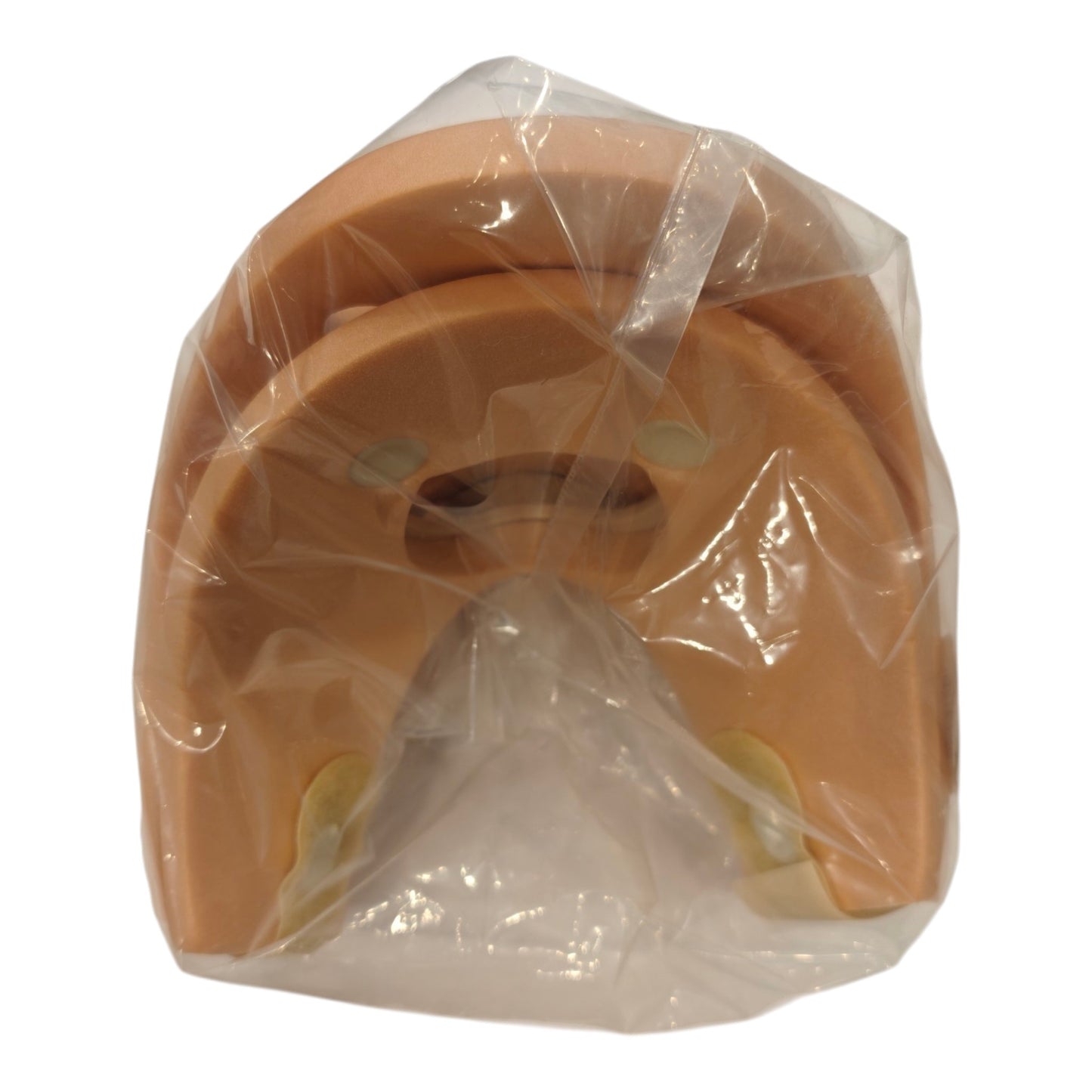
Tracheal Opening: A circular cutout at the front of the collar exposes the throat area. This allows access to the airway in emergencies and for breathing comfort. Patients with tracheostomies use this opening for tracheal tube access daily.
Trimmable Design: The collar edges can be cut to customize fit around individual patient anatomy. Clinicians and patients can trim small amounts for better chin and shoulder fit. Never trim aggressively — minor adjustments only, with clinical guidance for safety.
Radiolucent Construction: Materials allow X-rays, CT scans, and MRI scans without removing the collar. Patients with unstable injuries stay in the collar during imaging procedures safely. Emergency departments use Philadelphia collars partly for this imaging compatibility benefit.
Closed-Cell Foam Lining: Soft padding prevents skin breakdown during extended wear periods. The foam resists moisture absorption, reducing skin maceration and odor problems. Replacement foam liners are available for long-term users requiring weekly changes.
Rigid Plastic Shell: Hard plastic exterior provides the actual motion restriction during normal daily activities. The shell maintains shape under load even when patients lean or bend forward. This rigidity is what separates Philadelphia collars from soft cervical collars completely.
Who Needs This Specific Collar
The Philadelphia cervical collar serves patients with specific clinical conditions and needs:
- Post-cervical spine surgery patients during the early weeks of immobilization.
- Stable cervical fractures managed without surgery in selected appropriate cases.
- Severe whiplash injuries with confirmed soft tissue damage from car accidents.
- Cervical disc herniation patients during conservative non-surgical treatment phases.
- Spinal cord injury patients during the acute stabilization and assessment period.
- Severe cervical arthritis flares requiring temporary motion restriction for relief.
- Pre-surgical immobilization before scheduled cervical spine procedures.
- Field stabilization by EMS in suspected cervical spine injury situations.
This collar is not for general neck stiffness or mild muscular tension complaints.
Common Medical Conditions It Helps
Surgeons and emergency physicians prescribe the Philadelphia collar for these specific conditions:
- Cervical spine fractures — stable C2 through C7 vertebral fractures.
- Post-anterior cervical discectomy and fusion (ACDF) — common cervical spine surgery.
- Posterior cervical fusion — multi-level cervical spine surgical procedures.
- Cervical laminectomy — decompression surgery for spinal stenosis cases.
- Severe whiplash (Grade 2-3) — with confirmed cervical structure damage.
- Cervical strain with ligamentous injury — partial tears of supportive structures.
- Atlantoaxial instability — upper cervical spine joint problems in selected cases.
- Rheumatoid arthritis with cervical involvement — during severe inflammatory flares.
Always follow your surgeon's specific protocol for when and how long to wear the collar.
Sizing — Getting the Right Fit
This specific model fits patients with neck circumference between 13 and 15 inches.
How to measure your neck:
- Wrap a soft measuring tape around the middle of your neck.
- The tape should sit at the level of the Adam's apple or thyroid cartilage.
- Keep the tape snug but not tight against the skin.
- Record the measurement in inches for collar sizing accuracy.
Philadelphia collar size range across all models:
| Size | Neck Circumference |
|---|---|
| Pediatric | 8-10 inches |
| Small | 10-13 inches |
| Medium (this model) | 13-15 inches |
| Large | 15-18 inches |
| X-Large | 18-22 inches |
Height options across the Philadelphia line:
- 2 1/4" height — for shorter necks and less restriction.
- 3 1/4" height (this model) — standard adult cervical immobilization.
- 4 1/4" height — for longer necks requiring maximum support.
Yaletown staff confirms proper fit during your pickup visit at no extra charge.
How to Wear It Correctly
Proper application matters enormously for the collar to do its job during recovery:
Step 1: Position the back half first. Slide the back half of the collar behind your neck against the spine. Center it so the foam padding rests evenly on both sides of your neck.
Step 2: Place the front half over your chin. Position the chin rest under your jaw, supporting the lower face area. The tracheal opening should align with the middle of your throat.
Step 3: Connect the Velcro straps. Attach the side straps to connect front and back halves together. Both sides should close at equal tension for symmetrical neck support.
Step 4: Check the fit. You should be able to slide one finger between the collar and your skin. Too tight restricts blood flow — too loose fails to immobilize the cervical spine.
Step 5: Test the motion restriction. Try gently to nod or turn your head — significant restriction is correct. If you can fully move your neck, the collar is too loose or wrong size.
Daily Life with a Cervical Collar
Wearing a Philadelphia collar significantly affects daily activities for weeks during recovery:
Bathing: Remove the collar carefully for showers, support your head with one hand. Dry the foam lining completely before reapplying to prevent skin irritation. Replacement foam covers help during long-term use for hygiene maintenance.
Sleep: Many patients wear the collar to sleep during the first weeks of recovery. Use a small pillow or no pillow at all to prevent neck flexion overnight. Your surgeon advises when nighttime removal becomes safe for your specific case.
Driving: Driving with a Philadelphia collar is generally not recommended during early recovery. The collar restricts shoulder checks and rear vision required for safe driving. Wait for your surgeon's clearance before resuming driving with the collar on.
Eating: The collar makes chewing and swallowing slightly more challenging at first. Cut food into smaller pieces and chew slowly during the first week of wear. Sit upright at meals to use gravity for swallowing assistance during recovery.
Working: Most office work continues with the collar — desk jobs adapt easily to neck restriction. Manual labor and heavy lifting are forbidden during cervical collar wear. Your physician provides specific work restrictions based on injury and recovery progress.
Care and Maintenance
Daily care extends the collar's useful life and prevents skin complications:
- Wipe the plastic shell with mild soap and water between uses.
- Air dry the foam lining completely before reapplying to clean skin.
- Replace the foam liners when they become permanently soiled or damaged.
- Inspect Velcro closures for fraying or weakened grip strength regularly.
- Check skin daily for redness, breakdown, or pressure spots under the collar.
- Apply hypoallergenic powder sparingly to dry skin if irritation develops.
- Do not machine wash any component — hand wipe surfaces only with mild detergent.
What Yaletown Stocks for Cervical Support
Yaletown Medical Supplies stocks a complete range of cervical support products beyond this collar:
- Philadelphia Cervical Collar (all sizes) — small, medium, large, X-large with various heights.
- Aspen Cervical Collars — premium semi-rigid alternative for selected cases.
- Soft cervical collars — for mild strain and post-Philadelphia transition.
- Replacement foam liners — for long-term Philadelphia collar users.
- Pediatric cervical collars — specifically sized for children with cervical needs.
- Halo brace components — for complex cervical spine immobilization cases.
Our trained staff fits each collar during in-store visits at no extra charge.
Common Questions
Will BC extended health insurance cover this cervical collar? Many plans cover cervical collars with a physician's written prescription documenting medical need. Yaletown provides detailed itemized receipts to support your insurance reimbursement submission directly.
How long will I need to wear the cervical collar? Duration depends on the specific injury or surgery — typically 4-12 weeks. Your surgeon provides the exact timeline based on healing progress during follow-up visits.
Can I trim the collar myself? Minor trimming is acceptable for edges that rub or irritate your skin. Major trimming should be done under clinical guidance to preserve support integrity.
What if the collar feels too tight or too loose? Yaletown checks fit during pickup at no charge — return for adjustment if needed. A properly fit collar feels snug but allows one finger between the collar and skin.
Can I use this collar after my surgeon prescribed a different brand? Always use the brand your surgeon specified — different brands have varying support profiles. Contact your surgeon's office before switching brands during active recovery periods.
Is this safe for use during pregnancy? Yes — cervical collars do not affect pregnancy when prescribed for legitimate neck conditions. Discuss any pregnancy-specific concerns with your prescribing physician at follow-up appointments.
Can my child use this collar? This specific model fits adult neck sizes — children need pediatric cervical collars. Yaletown stocks pediatric Philadelphia collars in smaller sizes for children needing cervical support.
Will I need physical therapy after collar removal? Most cervical collar patients benefit from physiotherapy after the collar comes off. Your surgeon refers you to BC physiotherapists experienced with post-cervical recovery patients.
Pick Up Your Cervical Collar at Yaletown Today
The right cervical collar fitted properly makes a real difference during neck injury recovery. Visit Yaletown Medical Supplies with your physician's prescription for in-store sizing today. Our trained staff measures your neck, fits the collar, and demonstrates proper daily application. Call 236-466-2141 or visit 1255 Pacific Blvd, Vancouver, BC for in-person service.
We take great care to ensure that your order reaches you safely and promptly. All orders are processed and dispatched within 1-3 business days, depending on product availability. We work with reliable shipping partners to ensure fast and secure delivery.
Once your order has been shipped, you will receive a tracking number to monitor the progress of your shipment. Delivery times may vary depending on your location, typically ranging from 3 to 9 business days.
Please note that shipping will only be processed once payment has been fully completed. Orders will not be shipped until the payment is confirmed.
If you have any questions, feel free to contact our customer support team. We are happy to assist you.
Thank you for choosing us. We are committed to delivering your order promptly and ensuring a seamless shopping experience.