

You will not be allowed to compare more than 4 products at a time
View compare3M Micropore Paper Surgical Tape
3M Micropore Paper Surgical Tape
Regular price
$4.00 CAD
Sale price
$4.00 CAD
Regular price
Unit price
per
Shipping calculated at checkout.
In stock
Description
Shipping Information
Why Not All Medical Tape Is the Same
Most people grab the cheapest medical tape at the pharmacy without knowing the difference.
Then they discover their elderly mother's skin tears the moment they try to remove it.
3M Micropore Paper Surgical Tape solves this single problem with a uniquely gentle adhesive design.
Hospitals worldwide have used Micropore as the standard paper surgical tape since 1960.
Yaletown Medical Supplies stocks Micropore in multiple widths for Vancouver patients and caregivers.
Read this guide before buying any cheaper tape that might damage delicate skin today.
What Makes Micropore Different From Regular Medical Tape
Standard cloth and plastic medical tapes use aggressive acrylic or rubber adhesives that bond strongly.
These stronger adhesives pull skin cells off during removal, especially on elderly or fragile skin.
Micropore uses a hypoallergenic acrylic adhesive specifically formulated for sensitive skin compatibility worldwide.
The paper backing breathes, letting skin moisture evaporate instead of trapping it underneath the tape.
This combination prevents the skin maceration and irritation that closed plastic tapes commonly cause.
You can also tear Micropore easily by hand without needing scissors during a quick application.
Key Features of 3M Micropore Paper Tape
Every feature on this surgical tape addresses a real clinical or home care challenge:
Hypoallergenic acrylic adhesive — formulated specifically for patients with sensitive or fragile skin.
Breathable paper backing — allows moisture and air exchange, preventing skin maceration underneath the tape.
Easy hand-tear — rip the tape cleanly without scissors during fast-paced clinical applications.
Latex-free construction — safe for patients with latex allergies or related medical sensitivities.
Conforms to body contours — flexible paper adapts to joints, curves, and irregular skin surfaces.
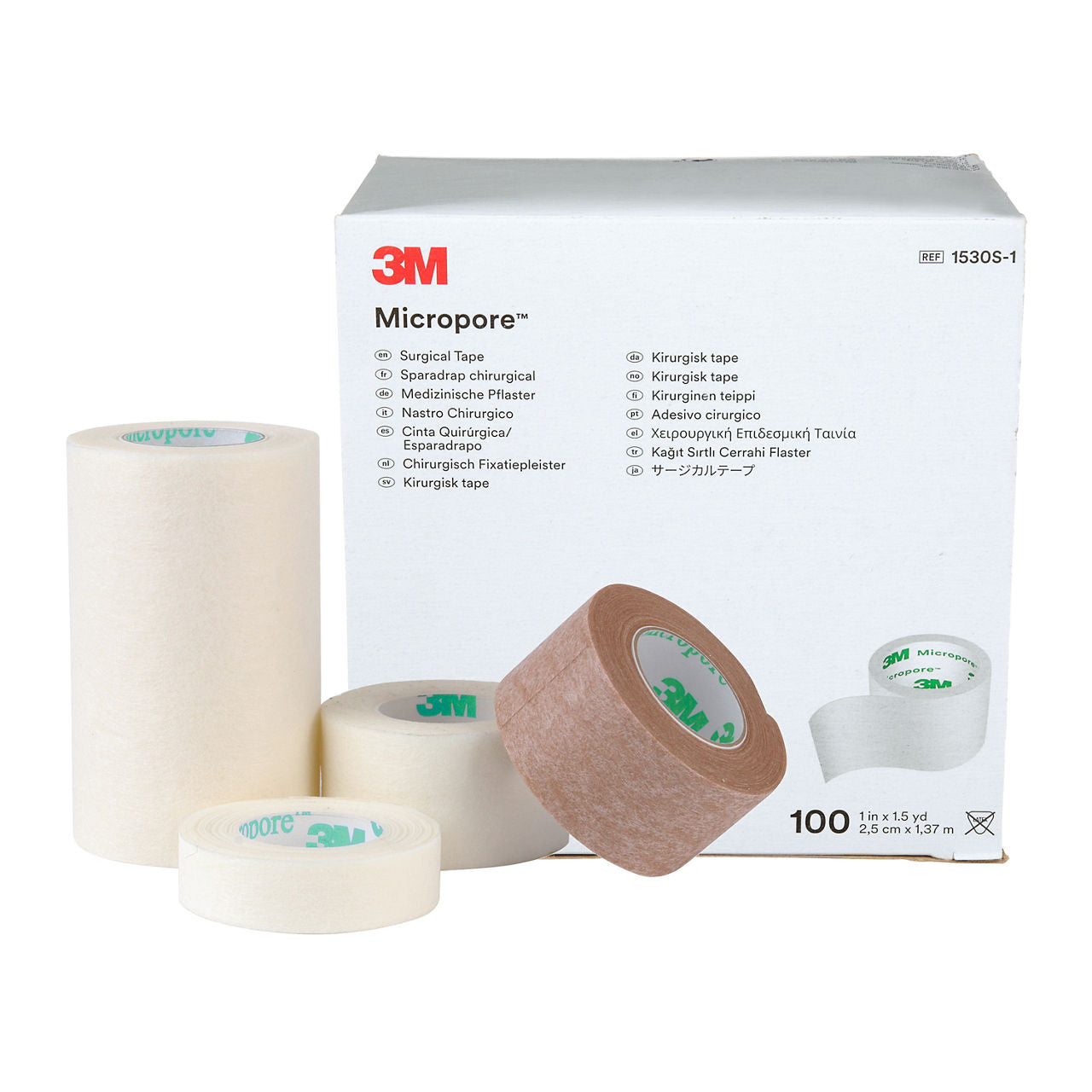
Multiple width options — choose narrow widths for delicate areas, wider for larger dressings.
White color — discreet appearance on most skin tones for daily wear comfort.
Long shelf life — properly stored rolls remain usable for several years past purchase.
Industry standard — chosen by hospitals worldwide as the reference paper surgical tape.
Who Specifically Needs 3M Micropore Paper Tape
Several patient groups benefit enormously from this gentle paper tape during their daily care:
Elderly patients with thin, fragile skin prone to tearing from aggressive adhesives.
Pediatric patients whose developing skin reacts to stronger tape adhesives painfully sometimes.
Post-surgical patients managing wound dressings or surgical drains at home daily.
Diabetic patients with neuropathy who cannot detect early skin reactions to tape.
IV therapy patients at home requiring tape changes every 24 to 72 hours.
Caregivers managing in-home wound care for elderly parents or chronically ill relatives.
Patients with previous tape allergies to acrylic, rubber, or zinc oxide adhesives.
Common Medical Uses for Paper Tape
The applications for paper tape extend far beyond just securing simple bandages every day:
Securing primary wound dressings — gauze, foam, or non-adherent contact layers over wounds.
Securing IV catheters and tubing — gentle enough for repeated daily IV line changes.
Securing nasal cannulas and oxygen tubing — comfortable for long-term respiratory therapy patients.
Securing ostomy bag connections — additional reinforcement around the ostomy appliance edges.
Securing surgical drains — wound vac dressings, JP drains, and similar surgical tubing.
Securing monitoring leads — ECG patches, pulse oximetry sensors, and continuous monitoring devices.
Closing minor skin tears — bridging small wounds in elderly patients without sutures.
Marking the body — reference marks for radiation therapy planning during oncology treatment.
How to Apply Micropore Properly
Proper technique prevents skin irritation and ensures the tape stays in place during wear.
Step 1: Wash your hands thoroughly before handling tape or any wound dressing materials.
Step 2: Clean the application area with mild soap and water, then pat completely dry.
Step 3: Allow lotions, creams, or ointments to fully absorb before applying tape directly.
Step 4: Tear the desired tape length by hand — no scissors needed for quick application.
Step 5: Apply the tape without stretching — pre-stretched tape pulls on skin during movement.
Step 6: Smooth the tape with gentle finger pressure from center outward to remove air bubbles.
Step 7: Avoid wrapping tape completely around limbs or fingers, as this restricts blood circulation.
How to Remove Without Skin Damage
Even gentle tapes need careful removal technique to protect fragile skin from injury daily.
Step 1: Lift one corner of the tape gently away from the skin underneath.
Step 2: Press the underlying skin downward as you peel the tape away slowly.
Step 3: Pull the tape back parallel to the skin, never straight up away.
Step 4: Remove slowly and steadily — fast removal causes more pain and potential skin tears.
Step 5: If the tape resists, dampen the edge with warm water or alcohol-free wipes.
Step 6: Inspect the underlying skin for redness, irritation, or any tape adhesive residue.
Step 7: Clean any residue with mild soap and water before applying fresh tape later.
When NOT to Use Paper Tape
Paper tape is not the right choice for every medical situation despite its gentle properties:
Highly moist or wet environments — paper backing loses adhesion when continuously wet.
Heavy wound exudate — saturated paper falls apart and fails to hold the dressing.
High-friction areas — knees, elbows, and shoulders need stronger cloth or silicone tape.
Long-term wear (over 7 days) — paper tape backing degrades faster than fabric alternatives.
Securing heavy splints or casts — paper tape lacks the tensile strength for structural support.
Underwater or swimming activities — water immersion destroys the paper backing within minutes.
Patients with extremely oily skin — adhesive bond weakens against persistent natural skin oils.
For these situations, consider 3M Transpore (plastic), 3M Durapore (cloth), or Mepitac (silicone).
Why 3M Sets the Tape Standard
3M Healthcare has manufactured medical adhesive products since the early 1900s in the US.
The Micropore tape line specifically launched in 1960 and quickly became the worldwide hospital standard.
Major Canadian hospital systems use Micropore for patients with sensitive skin throughout inpatient stays.
Clinical studies consistently demonstrate lower skin irritation rates compared to standard plastic or cloth tapes.
3M continues refining the Micropore adhesive formulation while maintaining the original gentle skin properties.
The paper tape category remains dominated by Micropore after more than 60 years globally.
Why Buy 3M Micropore From Yaletown Medical Supplies
Yaletown Medical Supplies stocks authentic 3M Healthcare products through authorized Canadian distribution channels only.
Counterfeit medical tapes circulate widely online and often fail during critical wound care moments.
Our trained staff explain proper application and removal techniques during your in-store visit anytime.
We also stock complementary wound care supplies — gauze, foam dressings, contact layers, and bandages.
Most BC extended health plans cover wound care supplies with a physician's written prescription form.
Yaletown provides itemized receipts compatible with Canadian extended health benefit claim submissions easily.
Frequently Asked Questions
Is 3M Micropore tape covered by BC extended health insurance plans?
Most extended health plans cover medical tapes with a physician's written prescription documenting need.
Yaletown provides detailed itemized receipts to support your insurance reimbursement submission directly.
How long does a Micropore tape roll last in storage?
Properly stored Micropore rolls remain effective for several years past the manufacture date.
Store rolls at room temperature, away from direct sunlight and high humidity environments.
Can I shower with Micropore tape in place?
Brief shower exposure works but prolonged water contact will eventually weaken the paper adhesion.
For extended water exposure, consider silicone or waterproof film dressings instead of paper tape.
Is Micropore the same as 3M Transpore or 3M Durapore?
No — Micropore is paper-based; Transpore is plastic and Durapore is cloth.
Each tape type serves different clinical applications based on strength, breathability, and skin gentleness.
Can babies and children use Micropore safely?
Yes — pediatricians commonly recommend Micropore for children due to its gentle skin compatibility.
The hypoallergenic adhesive minimizes the risk of irritation on developing pediatric skin.
Does Micropore leave a sticky residue after removal?
No — properly removed Micropore leaves minimal to no adhesive residue on the underlying skin.
Any small residue wipes away easily with mild soap and water during normal cleaning.
Can I use Micropore on hairy skin areas?
Yes, but apply in the direction of hair growth and remove slowly to minimize discomfort.
Pre-trimming excessive hair improves adhesion and reduces pain during the eventual removal.
Which width should I buy for my specific needs?
Narrow widths (1/2 inch) suit small dressings and pediatric use, wider for larger dressings.
Yaletown staff help you choose the right width for your specific application during pickup.
Switch to Gentle Paper Tape Today
Switch to breathable Micropore paper tape and protect delicate skin during every dressing change.
3M Micropore Paper Surgical Tape is the clinical standard for sensitive skin tape applications.
Visit Yaletown Medical Supplies for multiple widths and proper application demonstration today.
Stop using harsh tape that damages elderly or pediatric skin — switch to Micropore now.
We take great care to ensure that your order reaches you safely and promptly. All orders are processed and dispatched within 1-3 business days, depending on product availability. We work with reliable shipping partners to ensure fast and secure delivery.
Once your order has been shipped, you will receive a tracking number to monitor the progress of your shipment. Delivery times may vary depending on your location, typically ranging from 3 to 9 business days.
Please note that shipping will only be processed once payment has been fully completed. Orders will not be shipped until the payment is confirmed.
If you have any questions, feel free to contact our customer support team. We are happy to assist you.
Thank you for choosing us. We are committed to delivering your order promptly and ensuring a seamless shopping experience.